
How to Protect Curly Hair From Humidity This Spring
The season changes. So does your curl routine.
Spring in Oklahoma City is beautiful — and brutal on curly hair. As temperatures climb and moisture levels swing day to day, curls that looked defined in February start to frizz, puff, and lose their shape by May. If your routine worked all winter and suddenly stopped, humidity is almost certainly why.
This post breaks down exactly what humidity does to curly hair, what actually works to fight it, and how to adjust your spring routine so your curls stay defined no matter what the weather does.
Why Humidity Affects Curly Hair More Than Straight Hair
Curly and coily hair is naturally more porous than straight hair — meaning the outer layer of each strand (the cuticle) has more gaps and lifts more easily. When humidity rises, moisture from the air enters those gaps and causes the hair shaft to swell unevenly. The result: frizz, expanded volume, and lost curl definition.
This is amplified in OKC, where spring weather swings between dry heat and extreme humidity— sometimes in the same week. Your hair is constantly adjusting to the moisture in the air around it, and without the right products and techniques in place, it will absorb that humidity chaotically.
The key is to get ahead of it, not react to it.
The #1 Mistake Curly-Haired People Make in Spring
Switching to lighter products too soon.
It feels intuitive — winter was dry, so you used heavy creams and butters. Spring feels warmer and more humid, so you assume you need less product. But in high-humidity conditions, fine or light products often don't provide enough hold or barrier to keep moisture from entering the hair shaft in an uncontrolled way.
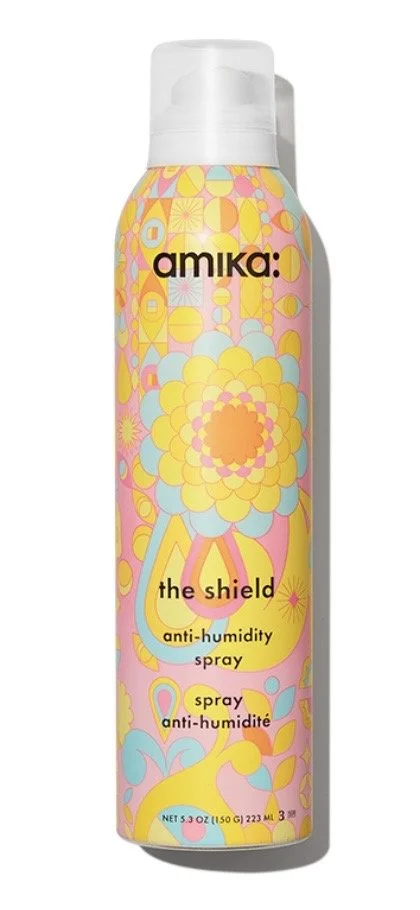
Amika heat protection anti-humidity spray
What your curls actually need in spring is anti-humidity protection, not just lighter weight. That's a specific function, not just a texture preference.
What to Look For in Spring Curl Products
When humidity is a factor, look for products that do two things: seal the cuticle and lock in the moisture you put in, so outside moisture can't get in and disrupt your curl pattern.
Ingredients that help:
Glycerin — a humectant that draws moisture to the hair, but works best when used in balance. In very high humidity, too much glycerin can over-attract moisture. Look for it in combination with sealants, not alone.
Silicones (non-buildup forming) — create a barrier on the hair shaft that resists humidity. Water-soluble silicones like dimethicone copolyol offer protection without requiring sulfate shampoos to remove.
Flaxseed and aloe — natural hold ingredients that define curls while maintaining flexibility. Our Twistout Foam is crafted with aloe vera making it a must have for Oklahoma City’s humidity. Purchase yours here now.
Oils used as a sealant (not a moisturizer) — applied as the last step of styling, a lightweight oil like argan or jojoba can help seal the cuticle before humidity hits. Shhhh, our Seed Oil will be restocking soon.
What to avoid in high humidity:
Heavy butters applied mid-shaft (they can attract and trap humidity, leading to limp, weighed-down curls)
Products with alcohol high on the ingredient list (drying, which causes the cuticle to stay raised and frizz-prone)
Skipping a hold product entirely. Here are two options we have in stock to eliminate your frizz from the humidity and add a layer of heat protectant, Kevin Murphy & Amika.
A Simple Spring Curl Routine for OKC Humidity
This is a baseline — your exact routine will depend on your curl type, porosity, and the specific products you're using. Take our curl quiz to be accurate.
Step 1: Cleanse thoroughly Start with a clean slate. Product buildup makes hair more susceptible to humidity because buildup prevents moisturizing products from penetrating properly. If you've been using heavy stylers all season, consider visiting a curly hair salon for a clarifying wash before transitioning your spring routine. Clarifying shampoos can be harsh and should be managed with care.
Step 2: Deep condition Spring humidity can trick hair into feeling moisturized when it's actually just reacting to the air. Regular deep conditioning treatments keeps your hair's internal moisture levels stable so it's less reactive to environmental changes. We recommend The Hydra at the start of every season.
Step 3: Apply leave-in on soaking wet hair The best time to apply a leave-in conditioner is when hair is completely saturated — this seals in water, not just product. This is what we recommend.
Step 4: Layer a curl cream or gel over the leave-in This is your hold and definition layer. In humidity-prone months, lean toward a medium-to-strong hold gel or a cream-gel hybrid. Apply while hair is still wet, scrunch upward, and don't disturb the cast until hair is fully dry. Ouidad Anti-Humidity is our favorite this time of year.
Step 5: Seal with a lightweight oil Press a small amount of lightweight oil over your styled hair before diffusing or air drying. This adds a final layer of cuticle protection.
Step 6: Heat & humidity protection and additional hold Spray your hair with Amika or Kevin Murphy for added hold and heat protection benefit. The Amika has proven humidity resistance.
Step 7: Dry completely before going outside Partially dry hair is the most vulnerable to humidity. Diffuse or allow full air dry time before heading out — wet hair exposed to outdoor humidity will frizz as it finishes drying.
Protecting Your Curls Overnight in Spring
Humidity doesn't stop at night. If your bedroom is warm or you sleep with a window open in spring, nighttime moisture can undo a perfect wash day.
Sleep on a satin pillowcase or in a satin bonnet — reduces friction and creates a slight barrier against air moisture
Pineapple your curls (loosely gather at the top of your head) to protect shape while you sleep
Refresh in the morning using our Twistout Foam— this reactivates the product that's already in your hair. The aloe vera aids in humidity repelling.
When to Come In for a Spring Curl Appointment
If your curls are fighting humidity every wash day despite the right routine, it may be time for a curly cut or deeper steam treatment such as The Hydra. Split ends and uneven lengths make frizz significantly worse — the damaged ends catch and expand with humidity instead of clumping with the rest of the curl.
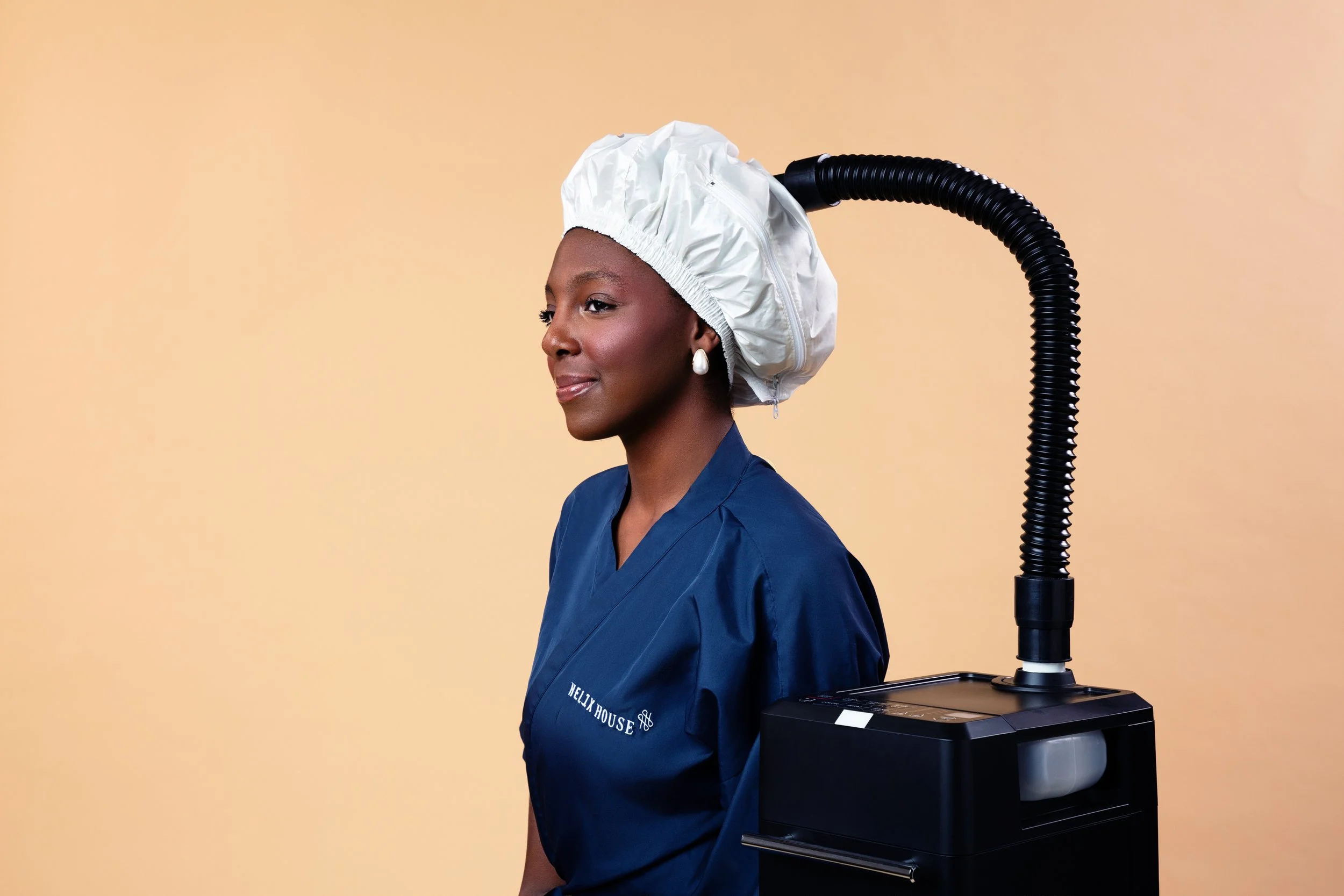
Woman getting a steam hair treatment to fight frizz at Helix House Salon with a professional grade steamer.
A curly cut removes that damage and reshapes the curl so it can coil cleanly from root to end. Spring is one of the best times of year to get a curly cut, before the full Oklahoma summer heat and humidity peak.
At Helix House, all of our stylists are trained specifically in curl cuts for every texture from 2A waves to 4C coils. We also carry products formulated for Oklahoma's climate — so if you're not sure which spring products are right for your curl type, we can help you figure that out at your appointment, or take our curl quiz and order now. We ship nationwide.
Book a spring curly appointment →The Helix
Quick Reference: Spring Curl Checklist
✓ Clarify before switching to your spring routine
✓ Steam treatment
✓ Apply leave-in to soaking wet hair
✓ Use a medium-to-strong hold styler in humid conditions
✓ Seal with lightweight oil as a final step
✓ Apply an anti-humidity and holding spray
✓ Dry hair completely before going outside
✓ Protect curls overnight with satin
✓ Book a curl cut if split ends are making frizz worse
Helix House Salon is OKC's curl specialty salon, serving every texture from 2A to 4C. Located on Western Ave. Book online → www.helixhousesalon.com